
Humansignal: >> Label Studio >> 1.10.1 Security Vulnerabilities
Label Studio is a multi-type data labeling and annotation tool. A vulnerability in versions prior to 1.18.0 allows an attacker to inject a malicious script into the context of a web page, which can lead to data theft, session hijacking, unauthorized actions on behalf of the user, and other attacks. The vulnerability is reproducible when sending a properly formatted request to the `POST /projects/upload-example/` endpoint. In the source code, the vulnerability is located at `label_studio/projects/views.py`. Version 1.18.0 contains a patch for the issue.
CVSS Score
6.1
EPSS Score
0.0
Published
2025-05-14
Label Studio is an open source data labeling tool. Prior to version 1.16.0, Label Studio's `/projects/upload-example` endpoint allows injection of arbitrary HTML through a `GET` request with an appropriately crafted `label_config` query parameter. By crafting a specially formatted XML label config with inline task data containing malicious HTML/JavaScript, an attacker can achieve Cross-Site Scripting (XSS). While the application has a Content Security Policy (CSP), it is only set in report-only mode, making it ineffective at preventing script execution. The vulnerability exists because the upload-example endpoint renders user-provided HTML content without proper sanitization on a GET request. This allows attackers to inject and execute arbitrary JavaScript in victims' browsers by getting them to visit a maliciously crafted URL. This is considered vulnerable because it enables attackers to execute JavaScript in victims' contexts, potentially allowing theft of sensitive data, session hijacking, or other malicious actions. Version 1.16.0 contains a patch for the issue.
CVSS Score
6.1
EPSS Score
0.056
Published
2025-02-14
Label Studio is an open source data labeling tool. Prior to version 1.16.0, Label Studio's S3 storage integration feature contains a Server-Side Request Forgery (SSRF) vulnerability in its endpoint configuration. When creating an S3 storage connection, the application allows users to specify a custom S3 endpoint URL via the s3_endpoint parameter. This endpoint URL is passed directly to the boto3 AWS SDK without proper validation or restrictions on the protocol or destination. The vulnerability allows an attacker to make the application send HTTP requests to arbitrary internal services by specifying them as the S3 endpoint. When the storage sync operation is triggered, the application attempts to make S3 API calls to the specified endpoint, effectively making HTTP requests to the target service and returning the response in error messages. This SSRF vulnerability enables attackers to bypass network segmentation and access internal services that should not be accessible from the external network. The vulnerability is particularly severe because error messages from failed requests contain the full response body, allowing data exfiltration from internal services. Version 1.16.0 contains a patch for the issue.
CVSS Score
8.6
EPSS Score
0.002
Published
2025-02-14
### Summary
On all Label Studio versions prior to 1.11.0, data imported via file upload feature is not properly sanitized prior to being rendered within a [`Choices`](https://labelstud.io/tags/choices) or [`Labels`](https://labelstud.io/tags/labels) tag, resulting in an XSS vulnerability.
### Details
Need permission to use the "data import" function. This was reproduced on Label Studio 1.10.1.
### PoC
1. Create a project.
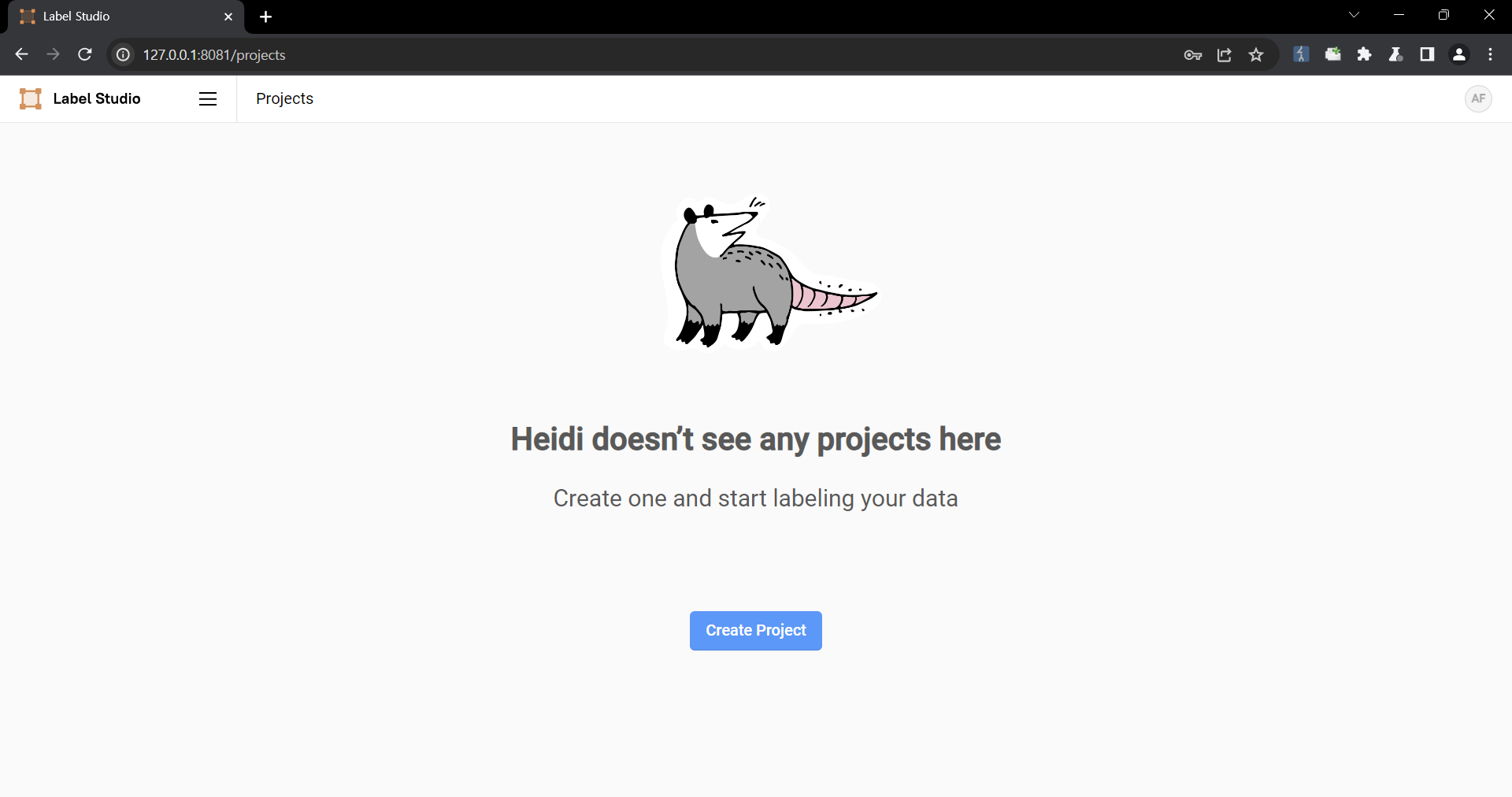
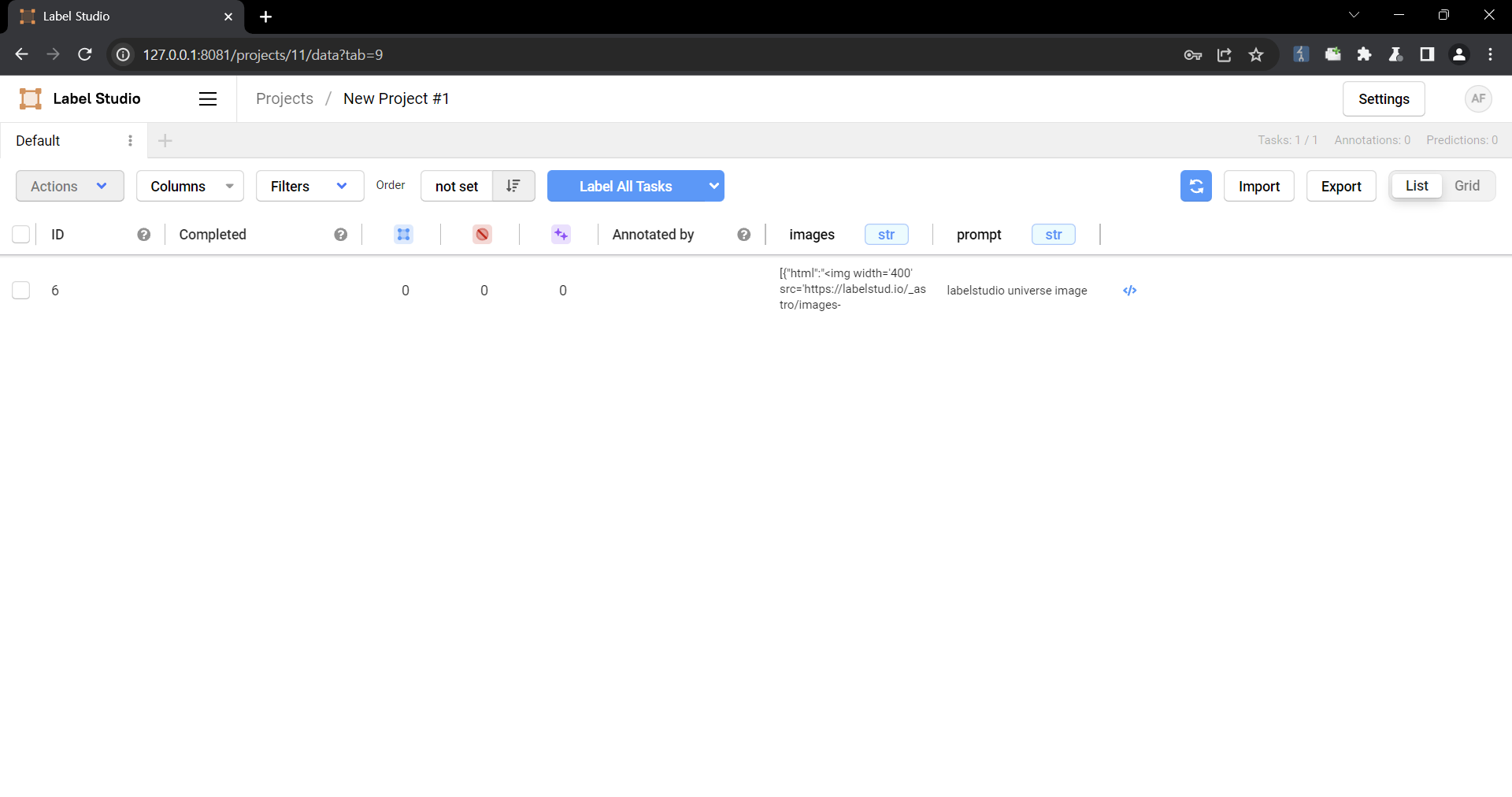
2. Upload a file containing the payload using the "Upload Files" function.
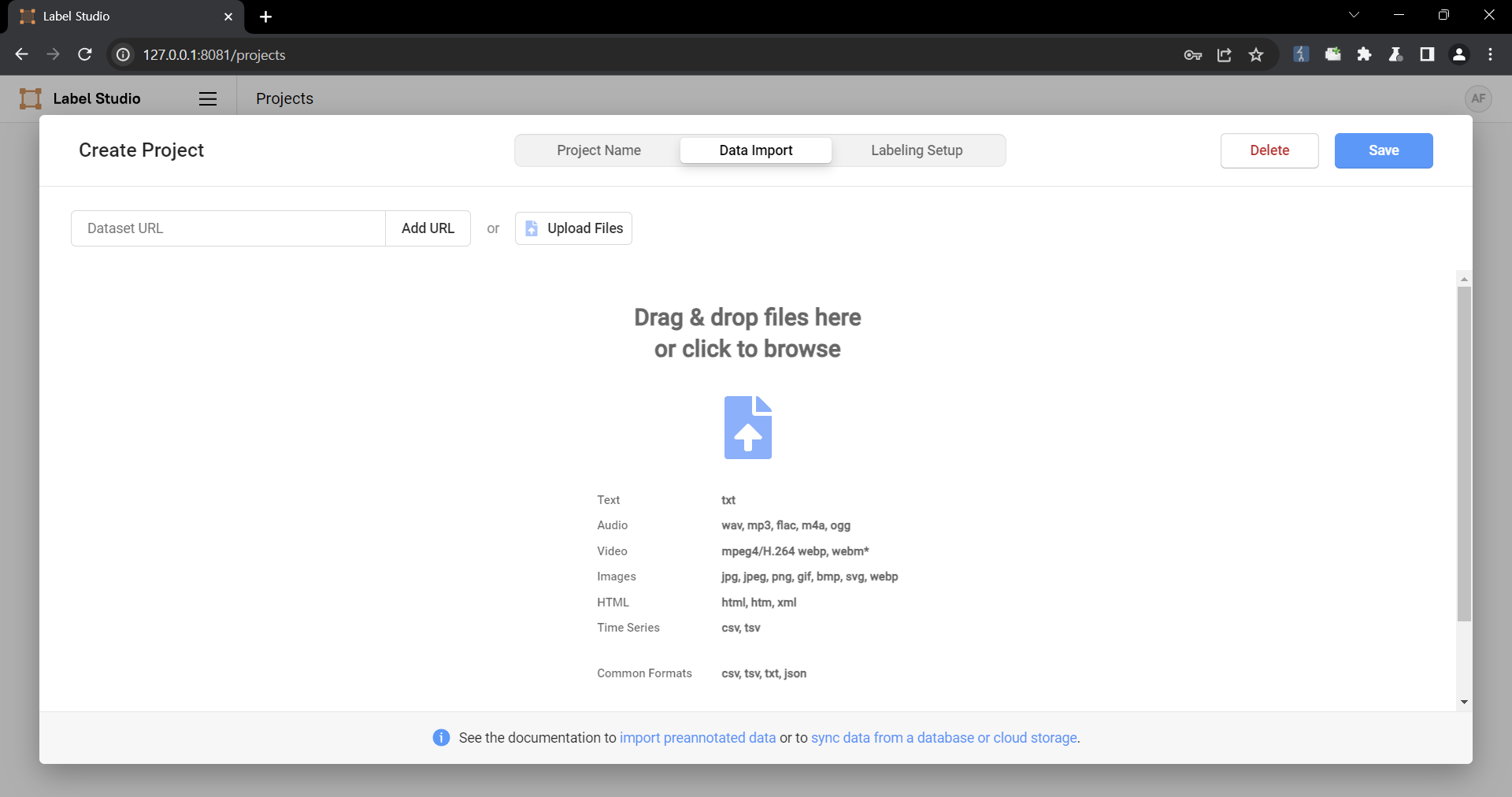
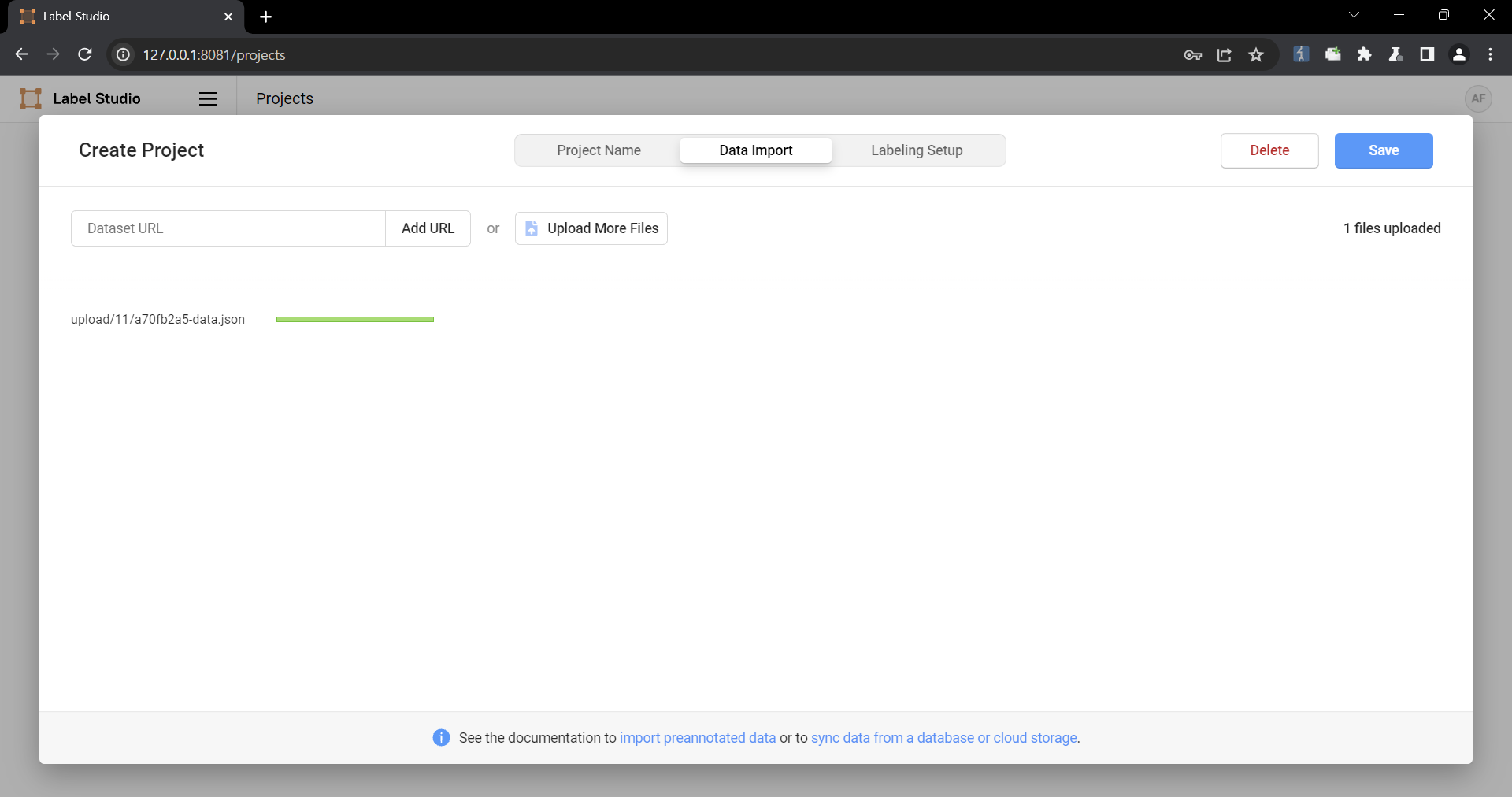
The following are the contents of the files used in the PoC
```
{
"data": {
"prompt": "labelstudio universe image",
"images": [
{
"value": "id123#0",
"style": "margin: 5px",
"html": "<img width='400' src='https://labelstud.io/_astro/images-tab.64279c16_ZaBSvC.avif' onload=alert(document.cookie)>"
}
]
}
}
```
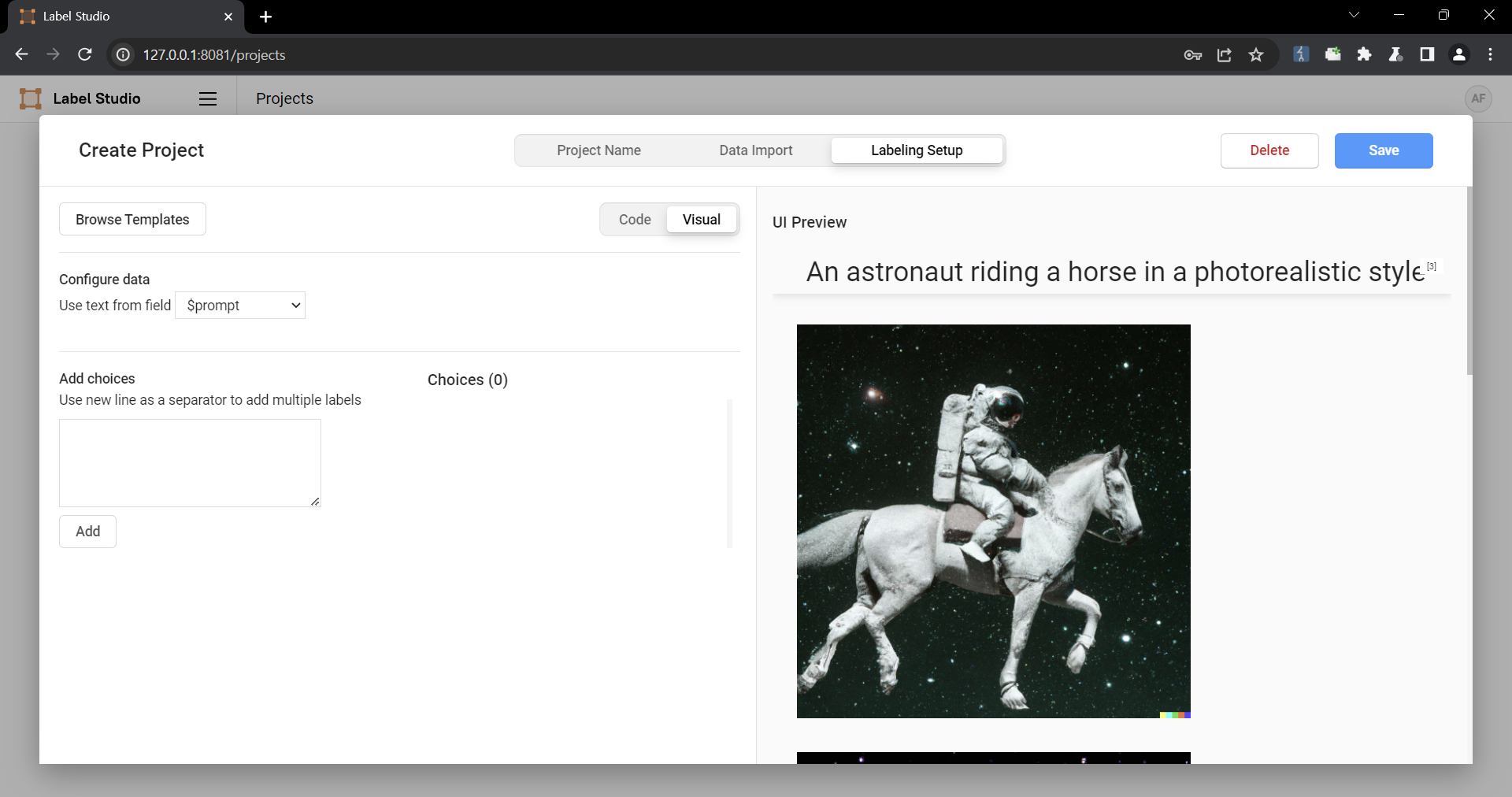
3. Select the text-to-image generation labeling template of Ranking and scoring
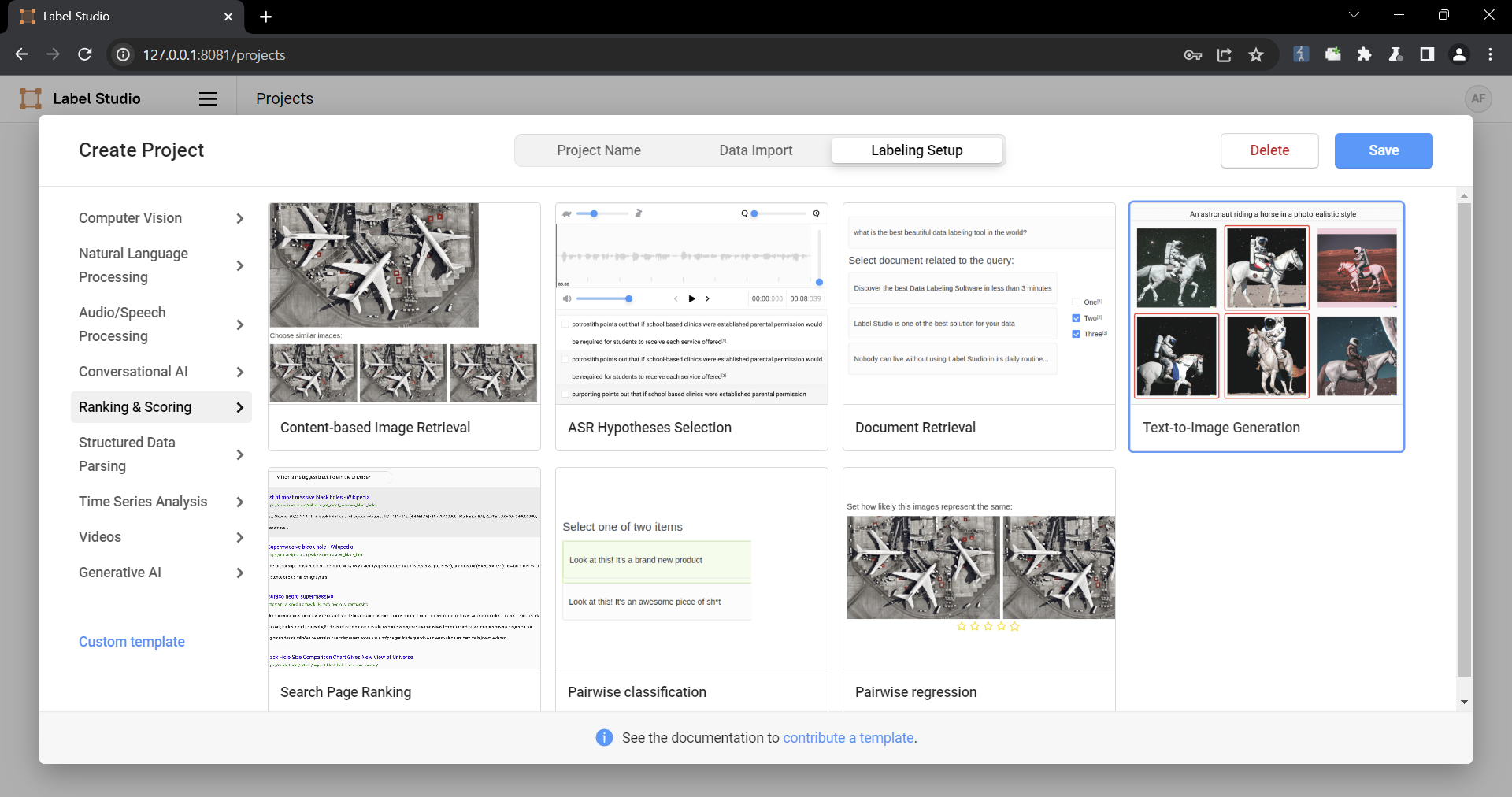
4. Select a task
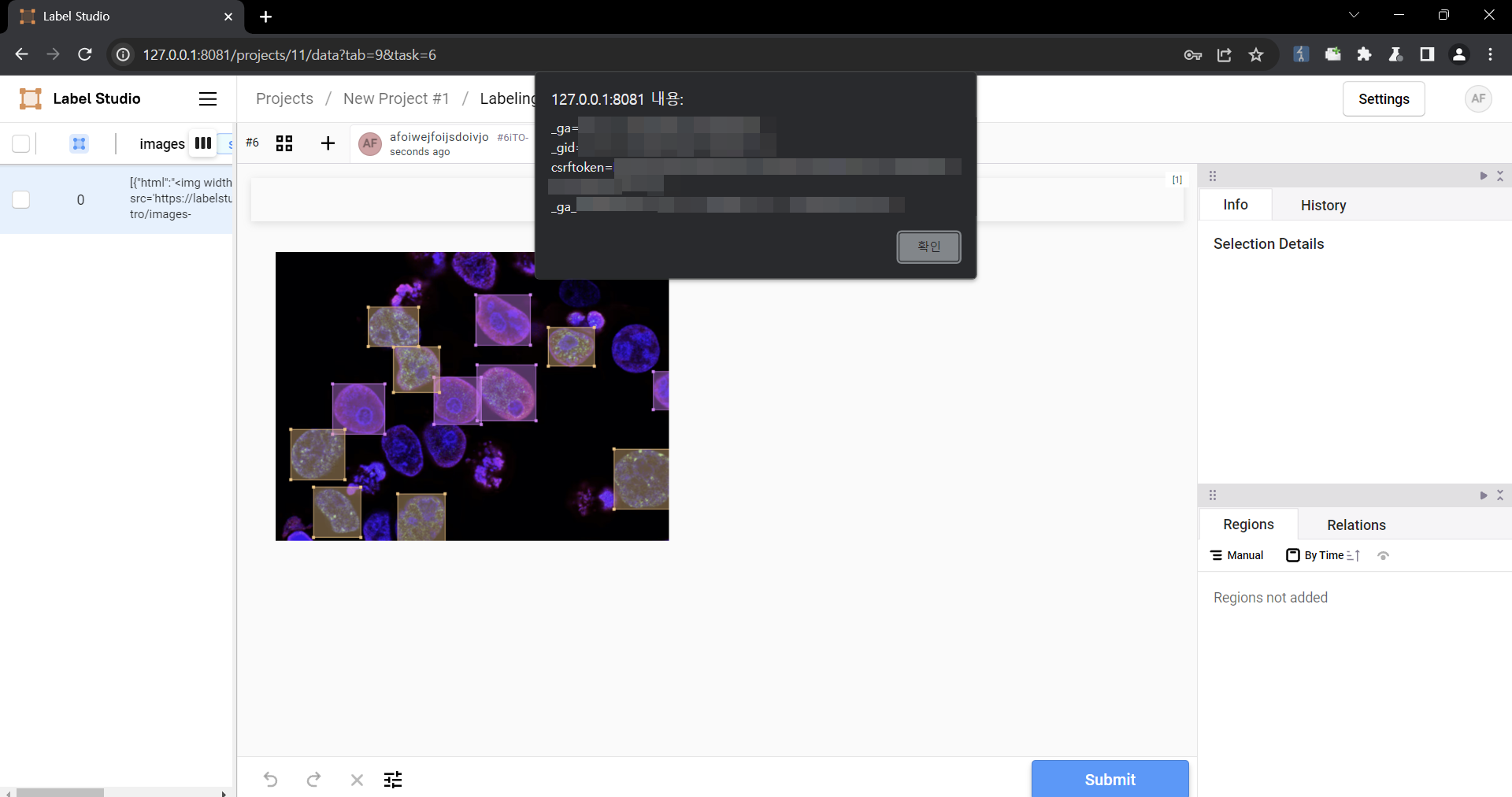
5. Check that the script is running
### Impact
Malicious scripts can be injected into the code, and when linked with vulnerabilities such as CSRF, it can cause even greater damage. In particular, It can become a source of further attacks, especially when linked to social engineering.
CVSS Score
4.7
EPSS Score
0.013
Published
2024-02-22
Label Studio is a popular open source data labeling tool. The vulnerability affects all versions of Label Studio prior to 1.11.0 and was tested on version 1.8.2. Label Studio's SSRF protections that can be enabled by setting the `SSRF_PROTECTION_ENABLED` environment variable can be bypassed to access internal web servers. This is because the current SSRF validation is done by executing a single DNS lookup to verify that the IP address is not in an excluded subnet range. This protection can be bypassed by either using HTTP redirection or performing a DNS rebinding attack.
CVSS Score
5.3
EPSS Score
0.002
Published
2024-01-31